A Document Studio for World-Builders
Tomeholder
The Archive. The Folio. The World.
Experience your world.
Free to start. Unlock the full archive for $39 — one payment, no subscription.
In closed beta until then. Beta tester? Create your account with your key, or sign in.
The Idea
Context and Artifact
in Dialogue
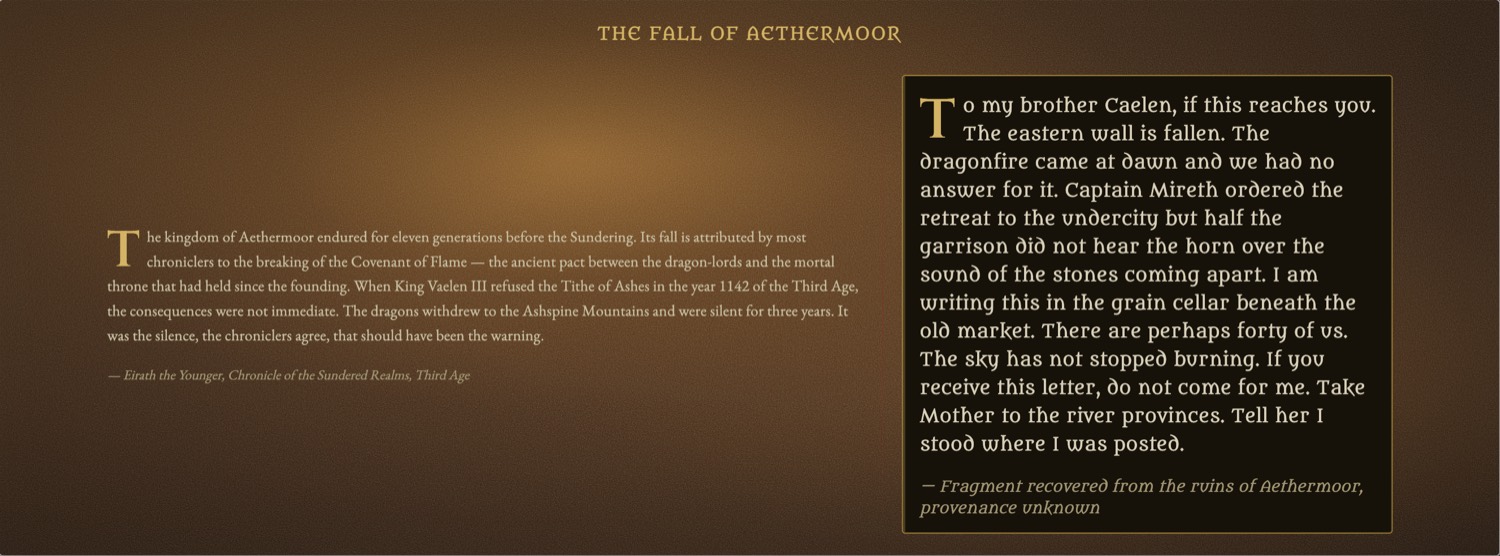
Most tools ask you to write. Tomeholder asks you to juxtapose — to place what was recorded beside what was lived, and let the tension between them do the work of world-building.
The Folio Entry
Every entry holds two facing passages. On the left, the scholarly frame: the historian's account, the analyst's summary, the chronicler's record. On the right, the artifact: the letter, the confession, the field report, the thing someone actually said or made or left behind. The gap between them is where your world lives.
The Archive
Organize your entries into folders and worlds. The Archive is your document studio — where you write, refine, and arrange your folios. Each world carries its own theme, its own voice, its own typographic character. Nine themes ship with Tomeholder, each speaking from inside the world it embodies.
The Codex
Open your world as a single continuous document — context and artifact facing each other, folder by folder, entry by entry. Not a database to click around, but a world you sit down and read, with ambient music scored for its theme.
The Export
Export your world as a typeset folio — cover page, table of contents, entries grouped by type, writing drafts included if you choose. The PDF is the artifact that gets printed, shared with players, handed to collaborators: the moment the world leaves the archive.
Bring your world from Obsidian, LegendKeeper or World Anvil, or from Markdown, HTML, CSV or plain text.
Visualize
See Your World Whole
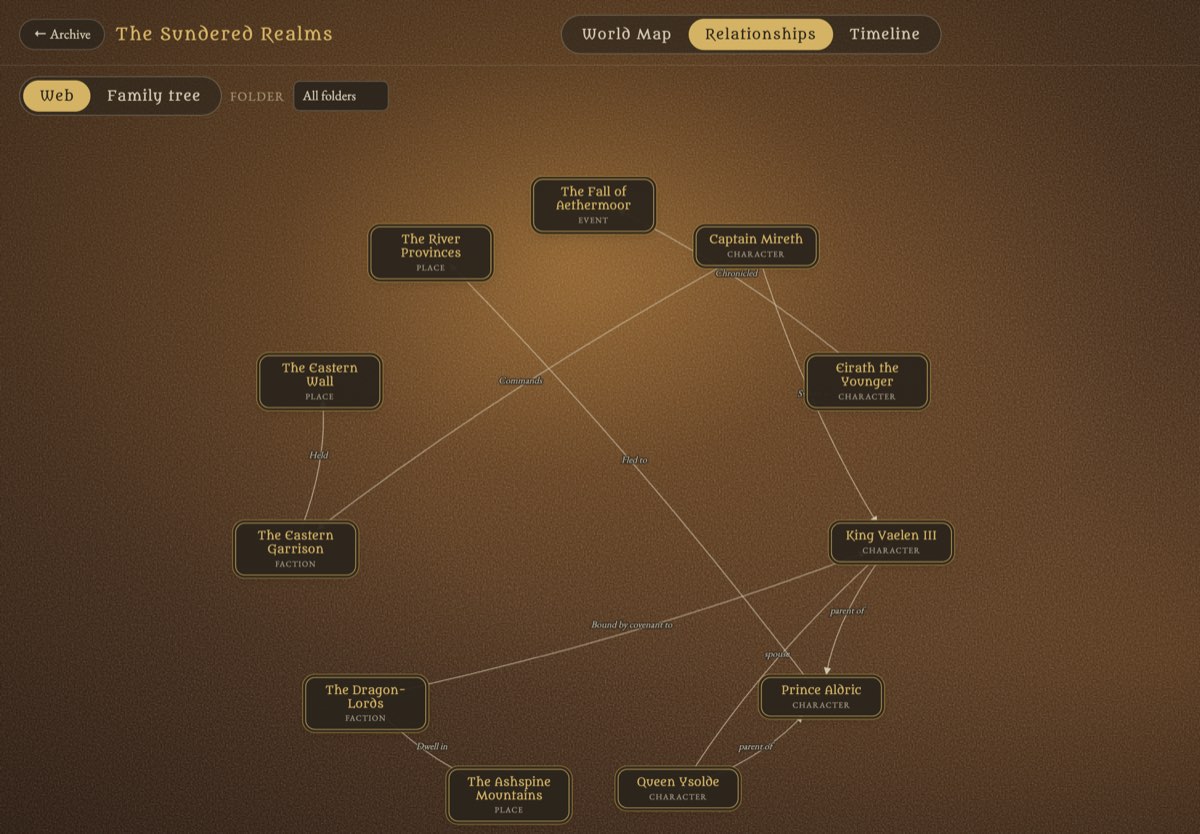
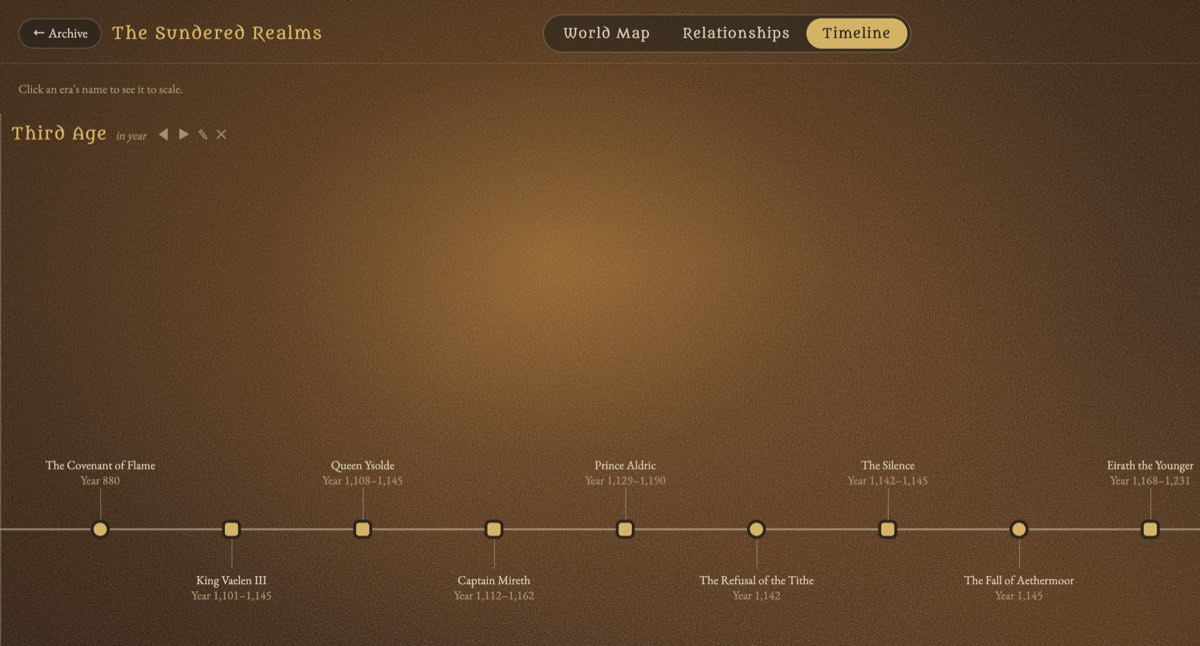
Pin your places on a world map. Draw the web of who is bound to whom, or the family tree. Lay your history out on a timeline, era by era. Part of the full archive.
For Whom
Three Kinds of People
Build Worlds
Tomeholder was made for all of them.
Tabletop RPG — D&D, Pathfinder, TTRPG
The Dungeon Master's Archive
You don't just run a world — you maintain it. Every session adds history. Every NPC has a version of events that differs from the players'. Every location has what the players know and what the dungeon actually holds.
Tomeholder gives that tension a home. Keep the chronicler's record of a dungeon's history on the left. Put the monster's journal on the right. Export it as a folio for your own reference, or hand it to a player as an in-world document they actually found.
Chaos in the lore is manageable. It is now organized chaos.
Fantasy, Historical Fiction, Science Fiction
The Novelist's Research Studio
You live between two texts: the source material you've read and the scenes you're trying to write. Tomeholder makes that relationship structural rather than accidental.
Put your research in the context column. Put the scene draft in the artifact column. Let the historical record sit beside the imagined response to it. When your editor asks where you got the detail about medieval leechbooks, you'll know — and so will the folio.
Nine themes let your working document feel like the world you're writing. Arcane for secondary-world fantasy. Academic for literary fiction. Victorian for historical. The archive should feel like where your story lives.
Narrative Design — Indie & Studio
The Narrative Designer's Lore Engine
In narrative game development, lore is a document problem before it's a design problem. You have the wiki, the internal canon doc, the contradictions between what the writer in 2021 established and what the lead designer changed in 2023. You have things the player can find and things they can't.
Tomeholder gives in-world document logic a native format. What the player reads in the terminal is the artifact. What the writers know about why it was written is the context. Export it as a folio for the creative director. Keep it as a living archive for the team.
The Codex reads your entire world as a single scrollable document, with ambient music scored for its theme — for the moment when you need to feel the world instead of manage it.
Nine Worlds
Themes That Speak
From Inside the World
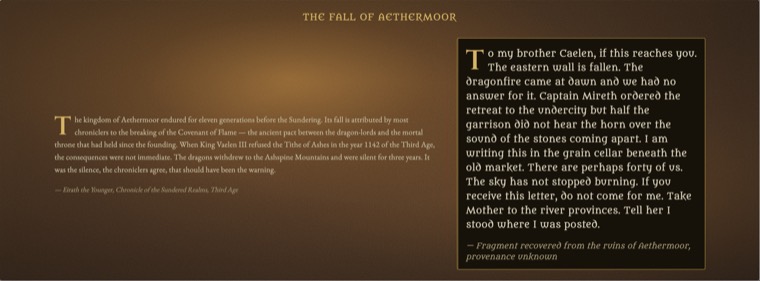
A theme in Tomeholder is not a skin. Each one carries its own typography, palette, voice, and document logic — a complete sensibility borrowed from the tradition it embodies. Two are free; the full archive opens all nine.
High Fantasy
Aged parchment and illuminated capitals. The chronicle of an age that ended before the story began.
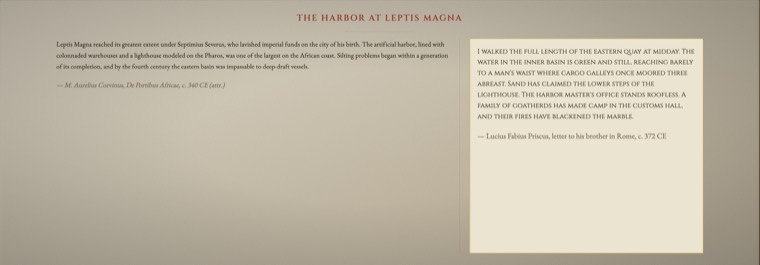
Classical Antiquity
Warm ivory and carved capitals. A Roman historian's account, preserved and annotated.
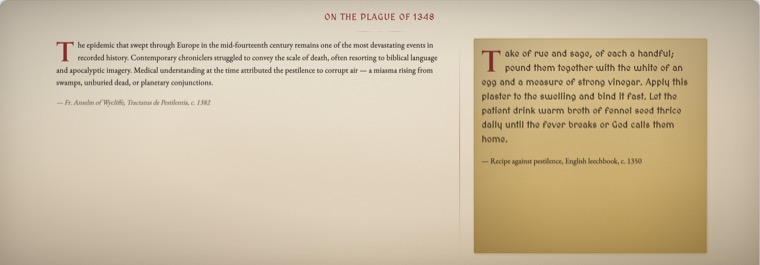
Medieval Manuscript Free
Vellum and uncial script. The folio of a monastery scholar, annotated in the margins.
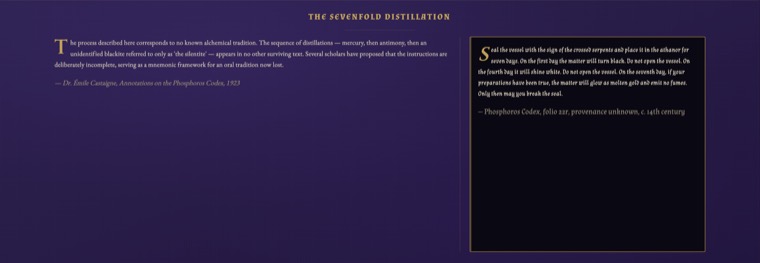
Arcane / Alchemical Codex
Deep indigo and gold. The laboratory codex of an alchemist who worked in secret.
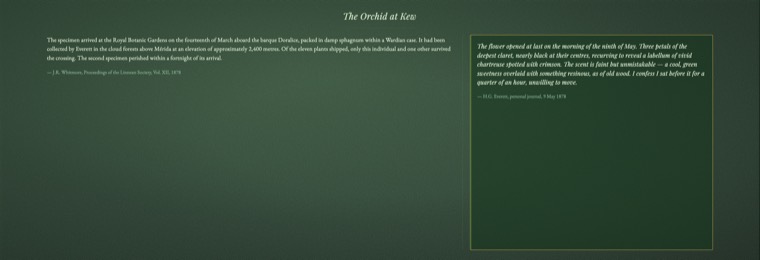
Victorian Scholarly
Botanical green and aged linen. The monograph of a natural historian with exacting footnotes.
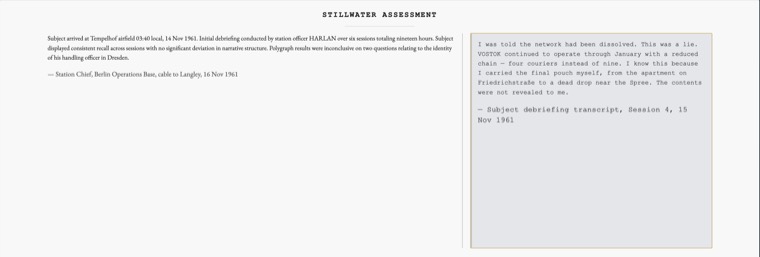
Government / Intelligence File
Typewriter and institutional grey. The classified file of an operation that may not have ended.
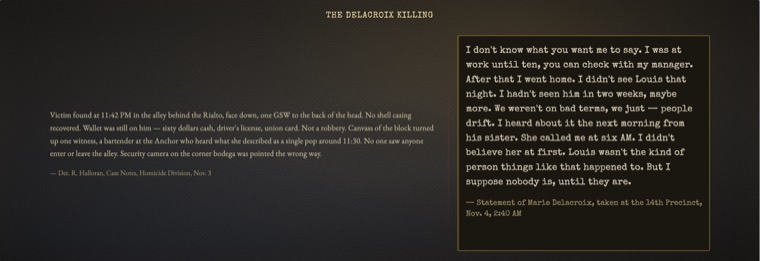
Neo-Noir / Crime
Typewriter keys on near-black amber. The case file of a detective who knows more than the report says.
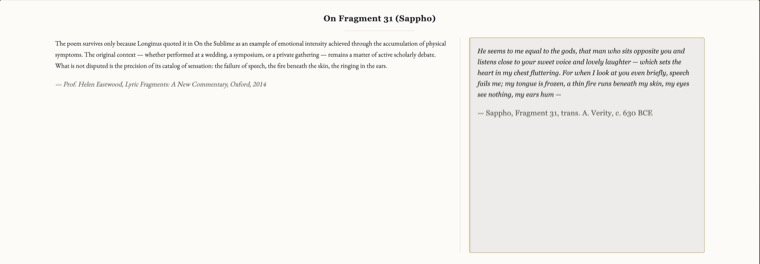
Modern Academic Edition Free
Clean white stock. The critical edition, with apparatus and commentary.
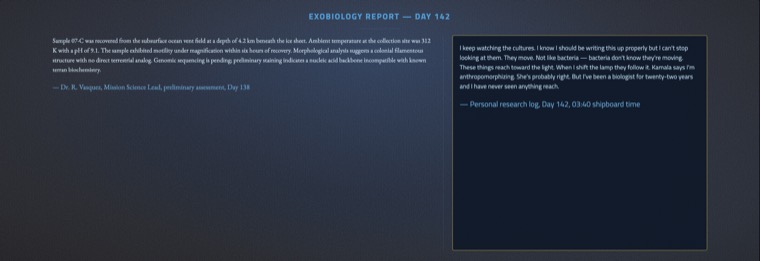
Deep Space
Cold light on near-black. The mission log of a science team that found something it cannot explain.
What's Inside
Everything the Archive Needs
Folio Entry Types
Six entry types — Character, Place, Faction, Event, Culture and Open — so the Codex and your exports group the world the way you've organized it.
Writing Studio
Thirteen structured templates, from diary entry to witness statement. Timed and untimed sprints. Drafts linked to the folio entries they grew from.
PDF Export
Typeset folios with a cover page, table of contents, and themed typography. The artifact that gets printed and kept.
Import Studio
Paste or upload what you already have. It splits the text into entries and suggests what each one is, and you review it all before anything is saved.
Codex View
Read your entire world as a single continuous document. Context and artifact facing each other, folder by folder.
Ambient Music
Each theme has its own score, playing while you read the Codex or write.
Marginalia
Annotate passages in the folio. Notes stay anchored to their words and travel with the entry into the PDF.
Never Locked In
Download your whole archive, images included, any time, in a format other tools can read — on the free edition too.
Pricing
Start Free.
Own It When You're Ready.
Begin your archive at no cost. When your world outgrows the free edition, unlock the full archive with a single payment — no subscription, no renewal.
Free
Start Your Archive
- 1 world
- Up to 20 folio entries
- 2 themes — Medieval Manuscript and Modern Academic
- Import from other tools
- The Codex and ambient music
- PDF export, with a "Free Edition" watermark and a "Created with Tomeholder" footer
- 512 MB of images
- Download your whole archive, any time
The Full Archive
One payment — yours for as long as Tomeholder runs
- No set limit on worlds or entries
- All nine themes
- Visualize — World Map, Relationships, Timeline
- PDF export in any theme, no watermark or footer
- 5 GB of images
- Everything in the free edition
- Improvements to these features included
Buying opens with sign-up on 24 November.
Prices in US dollars. Payment is handled by Lemon Squeezy, which adds any sales tax or VAT. A full refund within 14 days of buying — see the Terms of Use. Runs in your browser; nothing to install.
Questions
Before You Begin
Is my writing private?
Yes. Your worlds belong to you and are stored privately to your account. No one at Quiet Compass, the company that makes Tomeholder, reads them — unless you ask us to look at something, ask us to restore an earlier version, or we're investigating a credible report that they break the law or our terms. We never sell your writing or show it to anyone else. The privacy policy has the details.
Is my writing used to train AI?
No. We don't use your writing or images to train artificial intelligence, and we don't let anyone else do so. That's a promise in our Terms of Use, not just a setting.
Can I take my work with me?
Any time. Settings → Download your archive gives you everything, images included, in a format other tools can read. It's there on the free edition too.
What happens if Tomeholder closes?
We'll tell you by email and in the app at least 60 days before, and downloading your archive keeps working until the last day. If you bought the full archive in the 12 months before we announce it, you'll get back a proportionate part of what you paid.
Can I get a refund?
If the full archive isn't right for you, ask within 14 days of buying for a full refund — write to support@tomeholder.com or use the link in your receipt. Nothing you've written is deleted; your account goes back to the free edition.
What do I need to use it?
A modern web browser on a computer, tablet or phone. There's nothing to install. Long writing sessions are most comfortable on a larger screen.